Tuesday, February 09, 2010

Nature's Vignette


"Nature's Vignette"
West Odessa, Texas


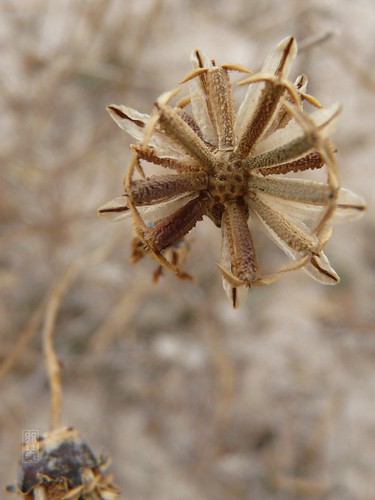
This is a little scene from my outing with the dogs this weekend. I've shared photos before of the dwarf desert holly (Acourtia nana) all up close. This photo is how it appears in situ, and how it catches the light.

Previous portraits of the dwarf desert holly from this blog:

...

Monday, February 08, 2010

Under the Overpass

Under the Overpass, Near Penwell Texas
"Under the Overpass"
Near Penwell, Texas


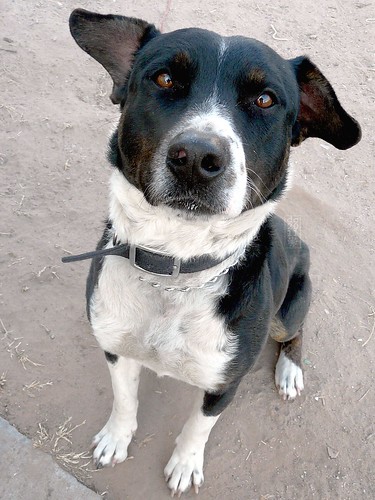
My dogs, Ansel and Dixie, and I got out Sunday to take photos for most of the day. It's been a few weeks since we've had a real outing, causing me to begin feeling a touch discombobulated. Now I feel set right again. The dogs, too.

Sunday, February 07, 2010

Winter Garb 2


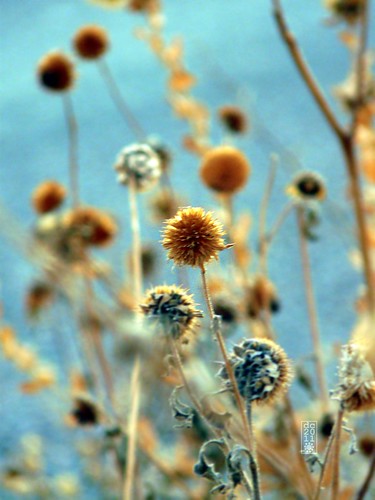
"Winter Garb 2" another unknown plant in its winter dress
Morgan Marsh, West Odessa, Texas

Friday, February 05, 2010

Winter Garb


"Winter Garb" unknown plant,
February 4, 2009 (last year)
Race Field, West Odessa, Texas

The weather forecast is mild weather the next few days, in the low 60s. I'll be visiting my two citizen science plots, Race Field and Morgan Marsh. Joy! I'm going to keep a lookout for this plant and bring some of its stems home. I want to take a look at its structure with my hand lens, and maybe try to get some extreme macro shots too.

I wonder what this plant is? It's impossible to look it up in my Texas plant books which only identify plants during their blooming season, not in their winter garb. In order to find out what plant this, I'll have to watch it until it grows again.

That's got me thinking about some kind of simple, ecologically sound staking system. What I want to do is to mark plants like this one so I can follow them throughout the seasons. This morning I remembered I have some dyed wool yarn which would be organic and visible. Rather than staking the plant itself — I don't want it showing up in photos — I'll look for long twigs lying on the ground to stake nearby, tying the wool on them.

Which brings me to my next question: Wonder how long before I begin to see my wool markers in the decoration of nearby pack rat nests?

Links:
In this Wikipedia article on pack rats, I learned some pack rat nests in the Southwest US have been carbon-dated to 1,000 years old, with recent research dating some to 40,000 years! Pack rats are a common desert mammal and their nests, called "middens," are interesting in their own right. Besides natural ingredients like mesquite, yucca, and cactus, it's not uncommon to see middens decorated with beer cans, bones, and scat.

Thursday, February 04, 2010

February Red


"Warm February Red"
Sam Houston St, Odessa, Texas

Oh, if my pomegranate tree only produced like this one.
"Cool February Red"
Sam Houston St, Odessa, Texas

It would be a real contest between the birds and me.

Wednesday, February 03, 2010

Where Have I Been?


Oh, where have I been? My head has been in the clouds!

I've been in my studio — aka the office, aka the craft room, aka the junk room — painting. Painting, a lot. And painting just about anything that seems fun to me. These all are acrylics, sometimes added collage elements, sometimes a touch of color pencils, on 8"x8" MDF panels.

I'm building up an inventory for opening an etsy shop.


Thursday, January 21, 2010

Naked Lotebush


"Naked Lotebush"
(Zizyphus obtusifolia)
West Odessa, Texas


This is the season when the lotebush is nothing but spines. No leaves. No blooms, no berries. On this specimen there isn't even any overwintering ovaries. Just a plant of pure spines. This is a young specimen, with spines about two inches long. I've seen older bushes where the spines were longer than my hand, at about 6 or 7 inches. Nothing to sneeze at. Or, worse, accidentally trip into!

Actually, tripping in the desert rarely turns out well.

An interesting photo essay on Sibley Nature Center site, which includes this about the remarkable ovary adaptation:

"Lotebush is a common shrub species found mixed in with mesquite bushes and tasajillo (christmas cholla cactus). When it blooms in May and June many species of insects come to nectar on the sticky waxy flowers (which are half the size of an adult human's pinkie fingernail.) After it blooms, the ovaries remain as discs until the following April and early May when blue berries appear, 11 months after insects pollinate the flowers. One other species of plant (a cactus known as Mammalaria vivipara or chilipitin cactus) on the Llano Estacado also displays this adaptation to the rainfall regime in the region (heaviest in May.)"

Wednesday, January 20, 2010

Milkweed, Some Moments Later


"Milkweed, Some Moments Later" 1,2
Time 5:10:42 and 5:11:24 pm, 42 seconds
January 14, 2010
Race Field,
West Odessa, Texas

After opening this milkweed pod, and seeing the seeds all lined up inside it, I thought of the children's hand rhyme, "Here's the church, here's the steeple. Open it up, and here's the people." The seeds look a little like members of a church choir, don't they?

This photo was taken at my second adopted citizen science location. I'm calling it Race Field because it is a large open field behind a horse race arena. I chose to adopt and study it because it's the epitome of an untouched West Odessa.

For now, anyway.

Tuesday, January 19, 2010

Marking the Occasion

Some of you remember that my blog started off as "A Photo A Day." That was way back in February of 2007. This is now my 700th post. To mark the occasion, how about a list of the top ten things I've learned about taking photos since then. Nothing earth-shatteringly new here, mostly a reminder list, really.
#1
Take my camera everywhere.

And if at all possible, I stop when I see a photo opportunity, not waiting until the next day even. I can't tell you how many times I've gone back to find that once delightful bloom beyond its prime. Or the roadside has been mowed. Or the entire field has been paved.

That's what happened to this photo's location, one of my all-time favorite places, now literally a parking lot.

"Golden Globes," October 2008, Interstate 20, Odessa, Texas
#2
Take photos every day.

But two or three times a week is serviceable. Once a week is bad. Zero per week and I get downright cranky.

Thankfully, though, taking photos doesn't necessarily mean going outside. Sometimes when I can't get out, the outside comes in.

"A New Friend" September 2008, West Odessa, Texas (my bathroom, to be exact)
#3
No, you won't remember.

I keep a little notebook with me to record places I go, names of people I photograph, and even ideas for future photos. I used to say of course I'll remember. But I've learned I won't.

Like this perfect pomegranate tree, as big as a shade tree, taken back when I believed I would always remember where it was.

"Pomegranate" July 2007, Somewhere in West Odessa, Texas
#4
Go! Rain or shine.

I've shot through my rainy windshield. I've pushed the shutter button with frozen fingers. I've dropped sweat from my face onto pretty little wildflowers.

I try to remember even just a little weather can make a more interesting photo, and a memory. Dress accordingly.

"The Day It Never Rained" June 2008, My brother Casey, Between Seminole and Lamesa, Texas
#5
My camera and I see differently.

I can't describe this technically, but I know what we see with our own eyes is not a perfect match to a camera's capture. The trick, then, is to learn what your camera will do with what you give it, and "collaborate."

I think that's why I've stuck with a Lumix brand (four years, three cameras). We've built our collaboration. Besides, I now have three batteries, two home chargers, one car charger, and a number of cards that all fit my camera, side benefits of sticking with a brand.

"Salvia's Song" February 2009, West Odessa, Texas
#6
Ignore "That won't work."

I was frightened when I first poked my camera into a flower: "It will be crap and I'll ruin my lens trying!" Since then, I've kissed a thousand flowers, and my lens keeps on going after a thousand cleanings.

Each time I go out, I include trying a "Nah, that won't work" shot. It usually doesn't. Sometimes, it opens a whole new world.

"New Camera" June 2008, West Odessa, Texas
#7
Shoot the breeze.

I'm no stranger to strangers. I feel comfortable talking to just about anyone.

Oddly, though, I get nervous taking photos of people. I suppose it's because I really, really, really want them to turn out well.

I've learned that talking while shooting people, asking them questions and shooting the breeze makes me less nervous. Them too.

P.S. Most people say yes, when you ask. Even if they at first say no.

"Abraham & Penguinito" February 2009, West Odessa, Texas
#8
One word: Prune.

Because this spider wove stems into her turret, I wouldn't prune for this shot. But, trust me, I have plenty where a jutting piece of grass over the very center view or beer bottles in the background should have been pruned.

By pruning, I'm not talking about anything environmentally unsound. No, I mean just take out the stray stick, brush off some distracting dirt, and generally pay attention to the whole, not just the, er, hole.

Take plastic bags with you. Pick up trash for bonus karma points!

"Spider Style" May 2009, West Odessa, Texas
#9
Be a tourist.

How many cotton fields have I seen in my life? How many tumbleweeds? How much red, sandy dirt? Too much, too many to count. Still, I'm really only a visitor, a tourist in this place and time.

There is no such thing as ordinary, except as a judgment. On the one hand, it's a challenge to take photos of what I've seen a million times. On the other, what else should I take photos of?


"One" January 2008, Martin County, Texas
#10
Don't worry. Be happy.

Taking photos is somewhat of a ruse. Having some good photos, a bonus. The real enjoyment is being outdoors, walking, open to seeing. If some photos turn out well enough to share or remind me of good times, it's icing on the cake.

And the best part? There's always today to get out for more photos and for more seeing.

"Winter Tapestry" January 2009, East Loop 338, Odessa, Texas


(And a Bonus)

Embrace Happy Accidents.

If you take photos, you'll have some happy accidents. They are yours, just as much as the shots you wrangled and poured your soul into.

You got up. You got dressed. You got out.

You pointed. You clicked.

It's truly yours. Embrace it.


"Two Photographers at Dawn" June 2008, Master Gardener's Compost Garden, Time Machine, Odessa, Texas

Thursday, January 14, 2010

Who Are You


"Who Are You?" Little dry weed like salsify, but much smaller
Morgan Marsh
West Odessa, Texas


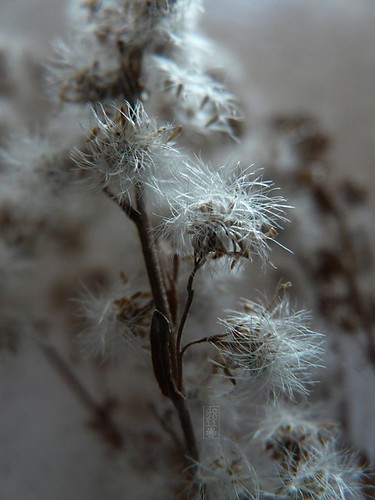
I don't know what this plant is. It would be rather easy to identify if only it were summer and assuming it were blooming. In its current winter form, I'm drawing a blank except it reminds me of salsify, also known as goatsbeard, but on a much smaller scale.

This plant is from a nearby acre lot I'm calling "Morgan Marsh." It's not a true marsh — nothing like that near me — but rather a low-lying area that accumulates extra rainfall, sometimes floods, and because of that has a diverse collection of wild plants. I've recently adopted it, meaning I'll go once a week to take photos of the plants, bugs, and critters that make it home. It's my "citizen science" project, a suggestion Burr Williams of the Sibley Nature Center often gives nature enthusiasts.

For a personal challenge, I'd simply like to learn to recognize local plants in not only their summer appearance, but their winter one as well. Doesn't that sound like fun?

Links:
  • Sibley Nature Center serves the Llano Estacado, an area spanning almost 40,000 square miles of West Texas and Eastern New Mexico. A map of the Llano here.
  • J.B. Calvert has an interesting write up describing the Llano.
  • As an example of Citizen Science, there's TexasInvasives.org an initiative to manage non-native invasive plants.
  • If you are interested in what might be available in your area, try Googling your location plus "citizen science" to see what comes up.

Tuesday, January 12, 2010

Old Ephedra


"Old Ephedra" 1, 2, 3, 4 (Click any to see larger)
West Odessa, Texas


Do these plants look 200 million years old?

Of course, these three specimens (the two on the left are the same plant) are not anything near that old, but they do have a long lineage as members of a class of plants that goes back to the Triassic period. Ephedras, of which there are about 40 species worldwide, are unique enough to have their own genus, family, and order.

As you can see, they don't have leaves, but rather conduct photosynthesis in their stems. Ephedra is a small, sprawling perennial shrub, prefers dry climates, and reproduces by cones. The appearance of cones explains one of their common names, "jointfir." Ephedras are also sometimes called "Mormon tea," prepared as tea and used medicinally by American natives and settlers for everything from colds to syphilis. Another common name is "clapweed," although I believe the poor souls who used it continued to suffer.

According to the Sibley Nature Center, there are three common species of ephedra locally: Ephedra torreyii, ephedra coryii and ephedra antisyphillitica. I'm not sure which I have pictured but next time I talk to founder and director Burr Williams, I'll ask if he can distinguish them in these photos. The Sibley site has lots of information and photos of ephedras, depicted in a great variety of environments and throughout the seasons. As always, the center is a valuable resource to me and countless others in the Llano Estacado.

The funny thing to me about ephedras is that it's not one of the plants commonly known here, although it is plentiful. Granted, it's not showy, so perhaps that's why. I'm thinking with some pruning, it could be a nice xeroscape specimen. Its flowers are tiny and stunning in macro. When spring comes, I'll share some close-ups with you.
Links:
The University of Arizona Geosciences department, focusing on its pollen
Wikipedia's Ephedra genus article (mostly above my head)
Very informative article by Susan E Meyers of the USDA National Forest service (pdf)
More than 50 results for ephedra on the Sibley Nature Center site.

Monday, January 11, 2010

Escape into Fencescapes


"Escape into Fencescapes" 1, 2, 3, 4
January 11, 2010
West Odessa, Texas


It was a beautiful day here today. Only as the sun slipped down did it get cool enough to wish for a sweater. I spent a mostly stolen, blissful two hours out taking photos.

I found another yucca without pods but rather aerial plantlets instead, which I'll post in a FB album for the Burr Williams Sibley Center crowd. This one was very green and thriving. Wonder if I planted one of the plantlets how it would reproduce when it matured? By traditional pods or plantlets?

For some reason, I was especially enchanted with taking portraits of our local species of ephedra today, which I'll post here tomorrow. Or perhaps if I could just get my act together, post on my nature blog, Leaves of Eve. I should gather up information about ephedra, from my books and online, and begin fulfilling my one of my 2010 goals, pursue a more dedicated nature self-education.

I saw a woodpecker — not the red ladder back kind maybe a yellow flicker gilded flicker northern flicker. That in addition to the normal crowd of critters: a cactus wren, gray cardinal, several horses, even a miniature horse, goats, a dead dog, several living dogs, a cat sunning itself atop a gazebo like some kind of funny finial, and a red-tailed hawk hunting over a field.

But what do I show you today? The delightfully weird landscapes I saw in a metal fence.

(Do I seem less weird if I say I see nature in them, too? A face, a tree, a baby bird, and clouds.)

Sunday, January 10, 2010

Sun Dried Tomato


"Sun Dried Tomato"
Antigone's Tomato Garden
West Odessa, Texas

A sun dried cherry tomato to be more exact, still on the vine.

Saturday, January 09, 2010

I Got Ink


"Forever Love" 5"X 5" acrylic on canvas by Debi Cates

No, none on my body. This is a prototype of some tattoo-inspired pieces I'll be painting to sell at our local seller's corner for Valentine's Day.

This reminds me of my Dad's tattoo. He got it back the day when only sailors got inked. He was 19 years old, in the Navy, in the Phillipines. And it doesn't take too much to assume he had probably partied pretty hardy during some shore leave. He had just the one, classically located on his upper arm, a heart with a ribbon going across it, my mother's name on the ribbon.

Misspelled.


Oh, Dad. If he were alive, I'd call him up Sunday morning and tease him unmercifully about that.

Friday, January 08, 2010

Quiet Corners


"Quiet Corner" 1, 2
West Odessa, Texas

I'm sure there was plenty of traffic noise, people talking, dogs barking, and other cacophonies going on while I was taking these photos, but when I look back on the experience I remember nothing but the sound of my own breath. And the sound of the light. Except I suppose light doesn't have sound. It just seems like it does.